




Tools and Engraving
The cost of producing embossing dies can be quite high, especially when performing full rotary etching and engraving on both male and female brass dies.In the label and packaging industry, there are 5 different types of embossing dies used.
1. Flatbed Embossing Dies
Flatbed metal dies used for embossing are not as complex as those used in full rotary systems. Flatbed dies have no curved surfaces and can be etched or engraved on a flat plane. Once the image has been etched or engraved, the die is ready to be installed in the printing press.The specific characteristics of each flatbed embossing die material are as follows:
- Flatbed Magnesium Embossing Dies
Magnesium is the softest and least expensive material used for making metal dies. This type of die is best suited for flatbed applications, particularly when only a small quantity is required with a single image.
The image on a magnesium plate is created using a chemical etching process. A photosensitive coating is applied to the plate, a negative film of the image is placed against the surface, and the plate is exposed to light before being developed with chemicals to create the image. The magnesium plate is then etched to remove non-image areas, leaving only the raised image.
- Flatbed Brass or Steel Dies
Unlike magnesium dies that are chemically etched, flatbed brass and steel embossing dies are engraved using CNC-driven digital engraving machines. The same method is also used for rotary brass or steel dies.
These flatbed dies are engraved on a flat surface, with the engraving head moving along the X and Y axes, raising and lowering as directed by digital data. This method produces highly detailed and precise images.
- Flatbed Copper Dies
Copper embossing dies are produced using a chemical etching process similar to magnesium dies. Since copper is harder than magnesium, it is more suitable for longer production runs.
Copper dies are ideal for jobs with multiple images and provide superior etching quality, resulting in excellent embossing performance.
2. Rotary Embossing Dies
Rotary brass or steel dies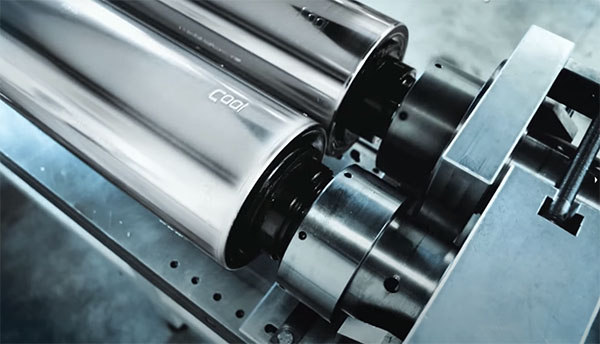
Figure 1 – Pair of embossing cylinders – positive and negative
The engraved images (both male and female) are created using the same principles as flatbed engraving, except the engraving head moves only along the X axis. Instead of moving across both X and Y axes, the rotary die rotates forward and backward along the Y axis while the engraving head moves up and down as required. This complex engraving system is driven by digital files containing the image to be engraved.
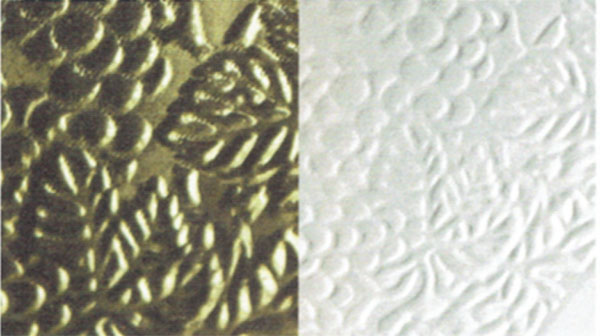
Another option for rotary embossing involves what is known as the sleeve system.
This system produces a sleeve that fits over a reusable base cylinder, reducing the amount of metal required. The sleeve is produced to match the width of the embossed area needed.
Once the sleeve is fitted over the base cylinder, it can be positioned laterally and circumferentially to achieve accurate registration.
3. Combination Foil-Embossing
This method is commonly used for product labels and widely used in the production of seals, both adhesive and non-adhesive.
It provides a unique and premium decorative effect, especially on heavy, metallized substrates.
4. Combination Printing and Embossing
This technique combines printing and embossing in a single process using the same engraved die. Dies are made of steel or copper, with male and female dies mounted like regular embossing dies in a special press. This press typically has a letterpress inking roller system that applies ink onto the surface of the female die. The substrate is positioned between the two dies and pressed together under high pressure, resulting in an image that is both printed and embossed.
5. Holographic Embossing
Holographic embossing is widely used for large-scale hologram production.
This process creates extremely fine holographic patterns on polymer substrates that are metallized to provide reflectivity and brightness.
The process involves passing the polymer substrate between embossing rollers and a nickel shim carrying the holographic pattern. The rollers press against the shim with heat and pressure, transferring the image onto the polymer surface to produce the hologram.
As explained above, each embossing die type is used with different types of presses. It is often impractical for a single printing company to have all types of presses. Understanding the different die types, their quality, cost, and suitability helps you determine which printing method best matches your project needs.