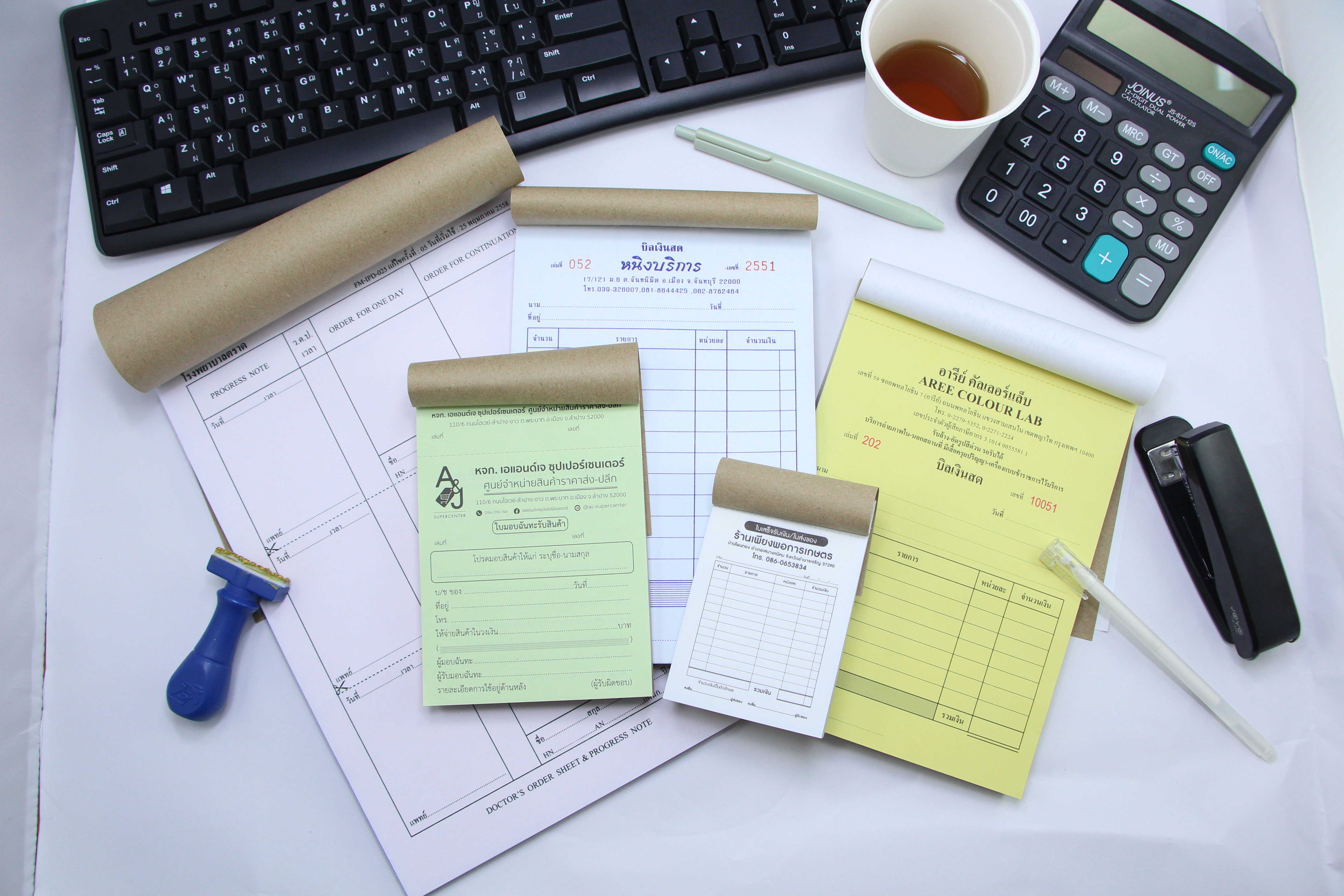

Receipt bills on plain paper and carbon paper serve different purposes—for example, creating duplicate copies without rewriting. Let’s dive into how these two types of bills differ to better understand their characteristics and uses.
Receipts on standard paper
-
Single-copy document
A standard paper receipt consists of a single sheet containing transaction details: purchased items, prices, total amount paid, and payment method. -
Printing technology
Plain-paper receipts are typically printed using thermal or inkjet printers. These devices use heat or ink to render text and images on the paper. -
Simplicity and convenience
Plain-paper receipts are easy to produce and manage, commonly used across retail and service industries to record customer transactions. -
Limited copies
A standard paper receipt creates only one record copy. The business keeps it for accounting and record-keeping, while the customer receives the original as proof of purchase.
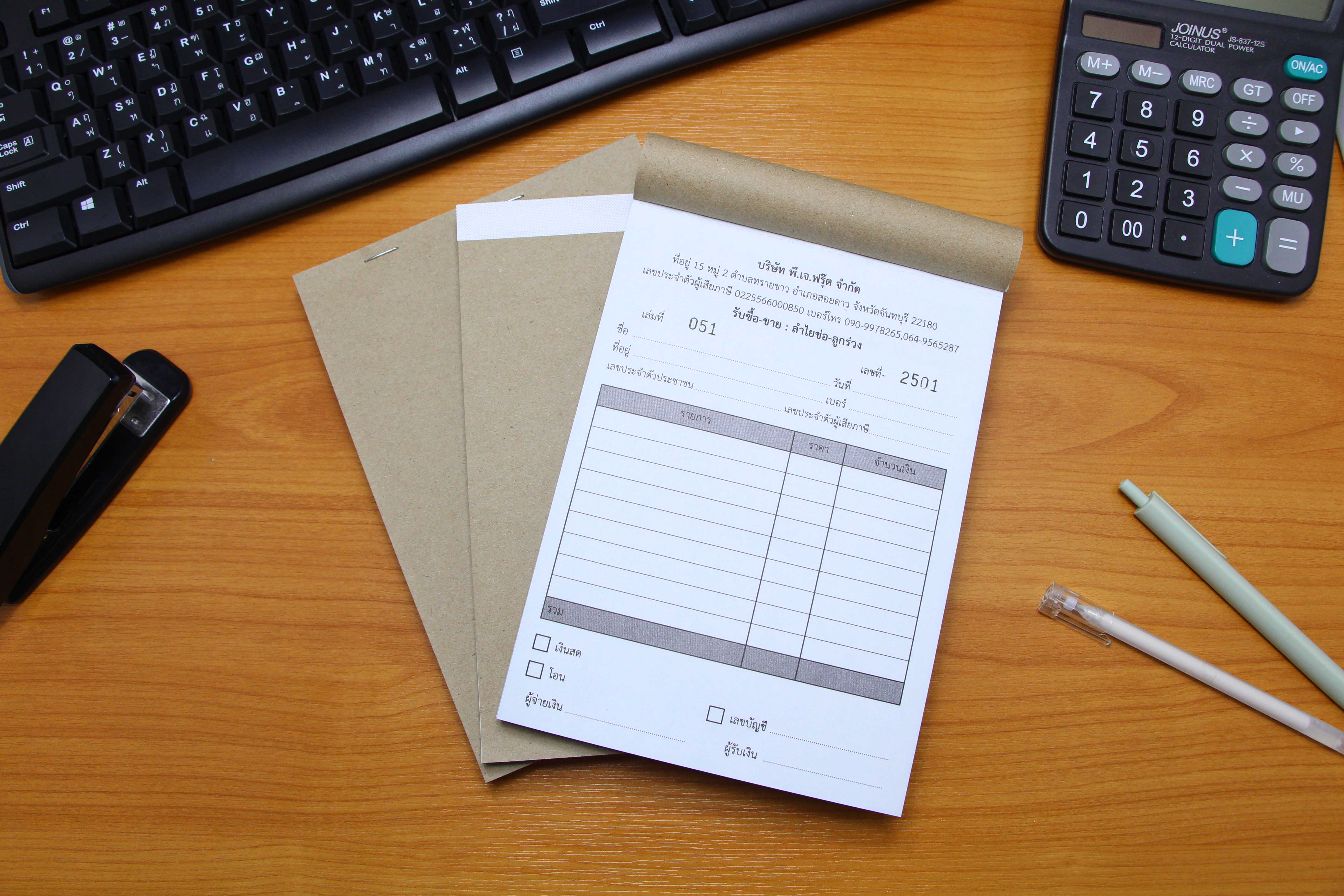
Carbon paper
-
Multi-copy documents
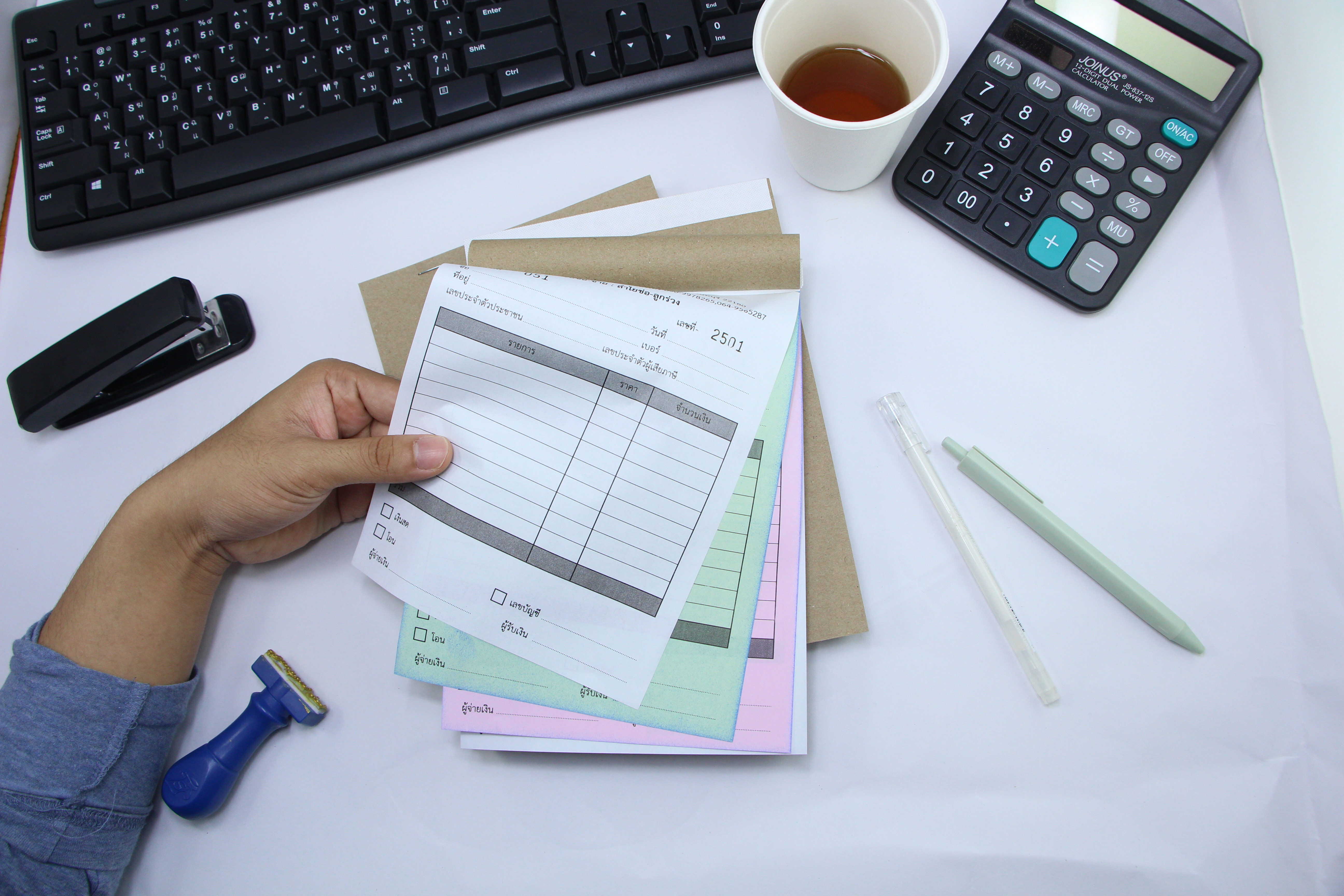
Carbon paper is designed to create duplicates of handwritten documents without rewriting. -
Layer construction
It’s a thin sheet coated on one side with carbon (or similar material). When pressure is applied to the top sheet, the carbon layer transfers the written content to the sheet below. -
Manual transfer process
To make duplicates, place the original over one or more carbon sheets and additional blanks. Writing or typing on the original transfers pigment/impressions to the sheets underneath. -
Use cases
Carbon paper works well wherever multiple handwritten or typed copies are required—invoice books, receipt books, purchase orders, and business contracts. -
Obsolescent technology
Once common, carbon paper usage has declined significantly with digital printing, photocopying, and electronic document management systems.
Key differences
-
Purpose
Plain-paper receipts primarily provide customers with a transaction record, whereas carbon paper is used to produce duplicate or triplicate copies of handwritten/typed documents. -
Number of copies
A standard paper receipt yields a single copy; carbon paper produces multiple copies at once. -
Typical use
Plain paper is common in retail and service transactions. Carbon paper is typical in administrative/document-heavy workflows that require repeated copies.
In summary, standard receipts and carbon paper serve different purposes and rely on different technologies. While single-copy plain-paper receipts are widespread for transactional records, carbon paper provides a manual duplication method for handwritten or typed documents that need multiple copies.