




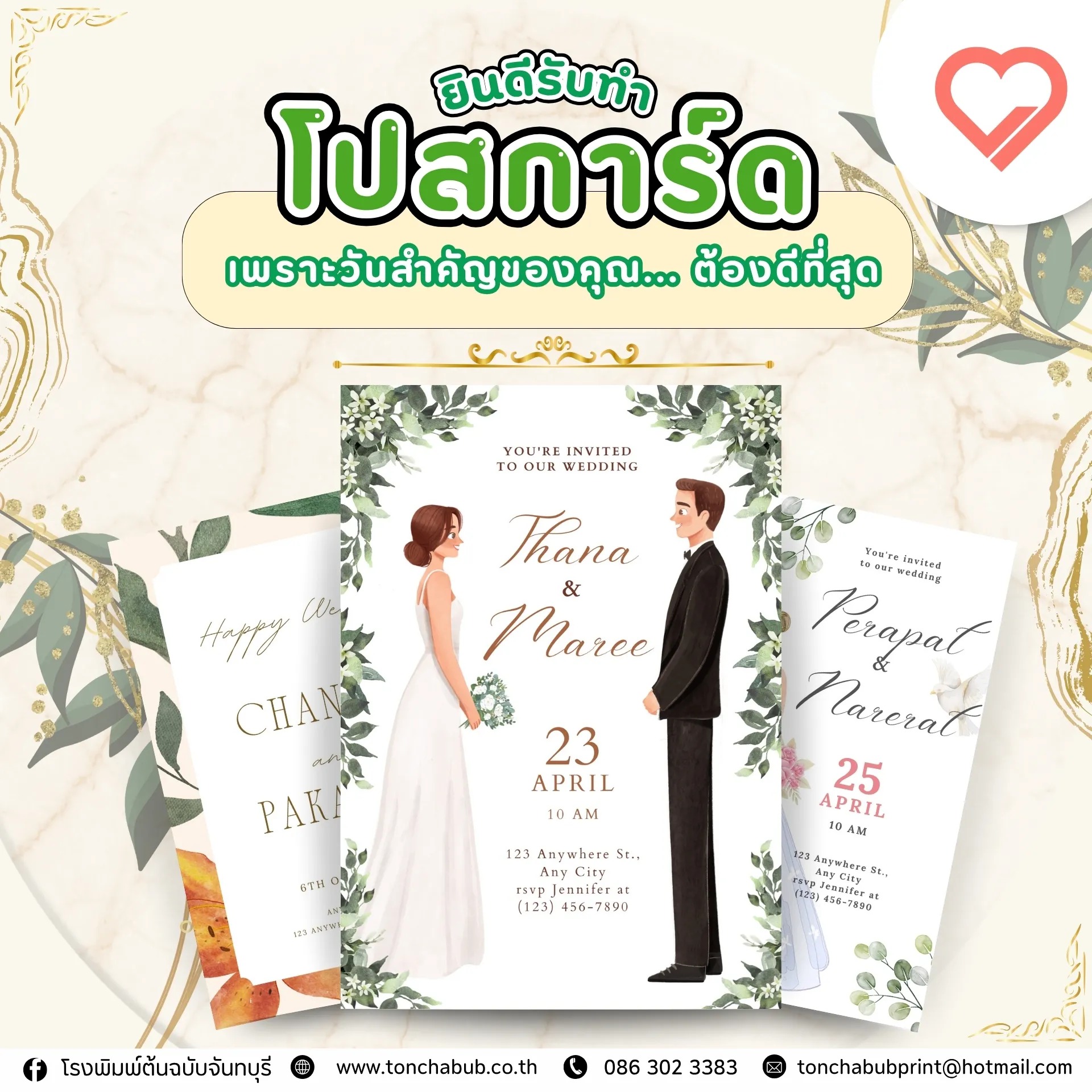
Wedding invitations are the first thing your guests will see from your big day—and they’re often kept as keepsakes. That’s why the paper you choose is just as important as the design. Thickness, surface finish, and even the tactile feel all shape the overall impression. This guide will help you pick the most suitable paper for your wedding invitations.
1. How to choose paper that matches your invitation style
Your wedding style should be reflected in the invitation. For modern, minimalist elegance, choose smooth white or cream papers such as art card or matte white card—they feel premium and work well with special finishing techniques.
Examples:
- Garden wedding: choose kraft paper printed with dark ink for simple, natural charm.
- Hotel ballroom: use 300 gsm white card with gold foil stamping for a luxurious look.
2. The right thickness (GSM) for quality wedding cards
Paper thickness is measured in GSM (grams per square meter).
Paper that’s too thin feels flimsy and isn’t ideal for mailing or handing to VIP guests.
- 120–160 gsm: too thin for cards; bends or tears easily.
- 190–220 gsm: works for simple, budget-friendly invitations.
- 250–300 gsm: the most common standard; suits most styles.
- 350 gsm and up: thick, premium feel.
For a formal, durable impression, use 260 gsm or higher so the card has satisfying weight in the hand.
3. How paper surface affects the feel of your invitations
Different surfaces change the overall look and feel:
- Glossy art paper:
Vivid, sharp color—great for photo-heavy designs, but reflective. - Matte art paper:
Soft, refined color—ideal for elegant, understated designs; non-reflective. - White/Cream card:
Smooth surface, prints beautifully, and supports all special finishes. - Kraft paper:
Natural brown tone for warm, minimal, nature-themed weddings.
For a more organic feel, choose matte or lightly textured papers to reinforce the natural aesthetic.
4. Papers that suit premium finishing techniques
Modern wedding cards often go beyond standard printing with touches like:
- Foil stamping: gold, silver, or rose gold for a luxe accent.
- Embossing/Debossing: adds dimension to names or monograms.
- Die-cutting: shaped edges or cut-out motifs.
- Coatings (matte/gloss/soft touch): elevates the tactile experience.
Choose paper with sufficient thickness—typically 260–300 gsm—so finishes don’t warp or damage the stock.
5. Match paper choice to budget and print quantity
Paper selection also depends on your print run and budget:
- For small runs (about 100–200 pieces), digital printing keeps costs in check while maintaining quality.
- For larger runs (500–1,000+), offset printing is more economical and offers a wider range of premium paper options.
Tip: Ask your print shop about in-stock papers or seasonal promotions on specialty stocks—you can save significantly.
Summary
The paper you choose for your wedding invitations is more than just a “printing surface.” It represents care, the very first impression, and the couple’s overall aesthetic. Thoughtful paper selection is a key step to making your celebration memorable—well before the ceremony even begins.